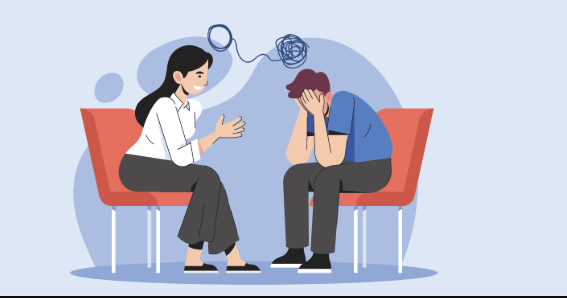
Relationship anxiety can make you question every text, silence, or plan — and it can wear you down fast. A skilled Therapists for Relationship Anxiety helps you understand where those worries come from and gives practical tools to reduce fear, build trust, and improve how you connect with others.
You’ll explore what triggers your anxiety, learn strategies to regulate your nervous system, and practice communication skills that change how relationships feel day to day. The article will explain how therapists assess patterns, use evidence-based approaches like CBT, attachment work, and emotion regulation, and tailor support whether you come alone or with a partner.
Understanding Relationship Anxiety
Relationship anxiety often stems from past experiences, insecure attachment, or real-time stressors that make you question your partner’s commitment and your own worth. It shows up as repeated worry, checking behaviors, and difficulty trusting reassurance even when your partner is consistent.
Common Causes of Relationship Anxiety
You may develop relationship anxiety from early attachment patterns. If caregivers were inconsistent or emotionally unavailable, you likely learned to expect instability in close relationships. That history makes you vigilant for signs that a partner might leave or withdraw.
Past betrayals, like infidelity or sudden breakups, create conditioned fear that similar events will repeat. You might interpret small signs—delayed replies, reduced affection—as evidence of looming loss. High personal stress (work, health, family) also lowers your tolerance for normal relationship uncertainty and amplifies anxious responses.
Personality traits matter too. If you have high neuroticism or a pattern of negative thinking, you’ll be more prone to catastrophizing and seeking constant reassurance. Substance use or unmanaged mental health conditions can worsen symptoms.
Signs and Symptoms to Recognize
You may constantly seek reassurance about your partner’s feelings or need repeated check-ins. That behavior can include texting to confirm plans, reviewing past messages for hidden meanings, or asking direct questions about commitment multiple times a day.
Emotional signs include chronic worry, fear of abandonment, jealousy, and heightened sensitivity to perceived slights. Physically, you might experience sleep loss, appetite change, heart palpitations, or panic in response to relationship stressors. Cognitively, you may ruminate, imagine worst-case scenarios, or misread neutral cues as threats.
Behaviorally, you might withdraw, cling, test boundaries, or escalate conflicts to get clarity. Those patterns often frustrate partners and can unintentionally create the distance you fear.
Impact on Romantic Partnerships
Your anxiety can erode trust and create repetitive conflict cycles. When you seek constant reassurance, your partner may feel pressured, become defensive, or withdraw, which confirms your fears and escalates anxiety.
Intimacy often suffers because emotional closeness requires vulnerability and safety. If you frequently scan for rejection, you’ll avoid deep conversations or shut down during disagreements. Sexual desire and satisfaction can decline when anxiety dominates interactions.
Practical consequences include difficulty making long-term plans together, frequent breakups and reconciliations, or staying in unhealthy relationships due to fear of being alone. Therapy and deliberate communication strategies can interrupt these patterns and rebuild secure interaction.
See also: Lawn Care in Mississauga: Expert Seasonal Tips for a Healthy Yard
How Therapists Support Relationship Anxiety
Therapists help you reduce repetitive worry, strengthen communication, and shift unhelpful attachment patterns. They combine evidence-based techniques, structured session plans, and tailored therapist matching to address the specific triggers and behaviors that undermine your relationships.
Approaches and Therapeutic Techniques
Therapists commonly use Cognitive Behavioral Therapy (CBT) to identify and change anxious thoughts and safety-seeking behaviors. CBT helps you track trigger thoughts, test predictions with behavioral experiments, and practice alternative self-statements to reduce catastrophizing.
Attachment-focused work explores how early relationship patterns affect your expectations and fears in current partnerships. Therapists guide you to notice reactivity, label attachment needs, and experiment with secure responses.
Emotionally Focused Therapy (EFT) and Emotion Regulation skills teach you to express vulnerability and soothe intense affect. Skills include grounding, paced breathing, and co-regulation exercises you can use during conflict.
Practical tools—communication scripts, boundary-setting templates, and relapse-prevention plans—help you apply gains between sessions. Therapists often combine techniques to fit your history, relationship status, and crisis level.
What to Expect in Therapy Sessions
Expect an initial assessment that maps your attachment style, anxiety triggers, and relationship goals. You and the therapist will set measurable targets, such as reducing checking behaviors or improving calm engagement during disagreements.
Sessions usually mix skill teaching, in-session practice, and homework. You might role-play asking for reassurance differently, complete thought records, or time-limited experiments to test feared outcomes.
Therapists track progress with symptom scales and session reviews. They adjust pacing when avoidance, dissociation, or repeated crises appear, and include partners when couples work will boost safety and shared change.
You should leave sessions with at least one actionable step—an exercise, a short script, or a practice plan—to use before the next meeting.
Choosing the Right Therapist for Relationship Concerns
Look for clinicians experienced in relationship anxiety, attachment theory, or couples work. Credentials to prioritize include licensed clinical social worker (LCSW), psychologist (PhD/PsyD), or licensed marriage and family therapist (LMFT) with specific training in CBT, EFT, or attachment-based therapies.
Ask potential therapists about their approach to anxiety in relationships, how they involve partners, and how they measure progress. Request a brief consultation to evaluate fit: does the therapist normalize your experience while challenging unhelpful patterns?
Consider practical fit: session format (individual, couples, or both), availability, insurance or sliding scale, and comfort with cultural or identity factors that shape your relational patterns.