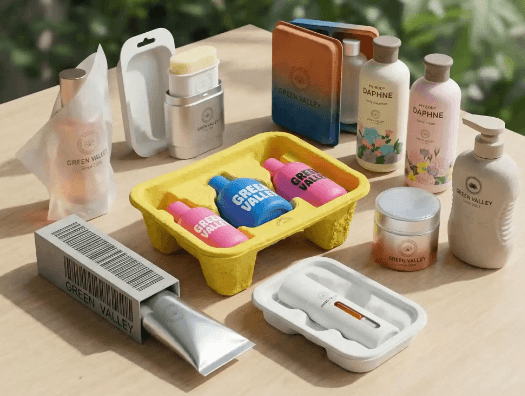
The packaging industry is in the throes of one of its most dramatic evolutions in decades. Consumer expectations have evolved, regulatory frameworks have become more stringent and the technology available to manufacturers is more advanced than anything traditional production lines were designed to handle. By 2026, packaging is no longer a back-office operation — it is a strategic lever that drives cost efficiency, brand perception, sustainability performance and market competitiveness. Companies that monitor and adapt to the innovation momentum in this area of the market will be able to lead the way. Those who don’t will be left to deal with the aftermath of lagging behind.
Technology Transforming Packaging
The packaging equipment that digital technology enables and production teams expect to now is very different. Today you can find artificial intelligence applications on packaging lines to track equipment health, run parameter optimization and quality deviations detection in real time – functionalities that were very expensive edge cases five years ago and are becoming mandatory specs today. Vision inspection systems have developed such that manual inspection cannot keep pace with checking label correctness, seal integrity and product placement. Robotics are now being integrated into routine procedures of receiving, packaging and picking products, in doing so reaching into product handling activities once thought beyond automation. Of course, the 2026 packaging floor looks nothing like the 2020 packaging floor, and the momentum is only picking up.
Automation and Efficiency
Efficiency has become the main impetus for automation investment, and the returns can be seen in every production metric. Automated lines provide a steady pace of output for the entire shift, without the variation that occurs under manual inputs. Error rates vanish. Material waste does too. Changeover times are compressed when recipe systems are used instead of manual routines.
The modern Cartoning Machine illustrates the full spectrum of the current level of automation. Carton erection, product loading, insert placement and closure are all performed under mechanical control, with integrated inspection verifying conformity at each operation. Two-way communication with MES enables the machine to contribute operational data to plant-wide performance monitoring — playing production asset and intelligence source roles simultaneously.
For the companies who can operate at that scale, the efficiency improvements from such automation are further compounded over time. Reduced labor requirements, lower defect rates, and ability to accurately capacity plan, result in a cost structure that manual operations simply cannot match.
Sustainability in Packaging
Sustainability is no longer a corporate communications priority, but an engineering requisite. Material accountability requires equipment-level data and design-level compatibility with sustainable formats, imposed on manufacturers by extended producer responsibility legislation in the EU, UK, and Canada. Lightweight board, recycled fiber substrates and diminished materials carton configurations are no longer niche demands—they are purchase specifications.
The Cartoning Machine platforms that will be launched on the global market in 2026 are being created with these requests in mind. Alternative substrate compatibility, reduction in energy use per cycle, and connection to material usage reporting systems are some of the features which are being considered by sustainability-conscious sourcing departments in addition to throughput and reliability.
Future Market Opportunities
The business prospects caused by packaging innovation in 2026 are unfolding in many industries and geographies. Pharmaceutical serialization regulations are pushing automation spending in developing regions as manual compliance is no longer feasible. E-commerce expansion is adding pressure on the packaging industry to provide flexible, high-speed packaging solutions that can accommodate a wide range of product formats in direct-to-consumer volumes. Personalised packaging solutions – short run packaging production supporting promotional agility without sacrificing efficiency.
See also: Autonomous Vehicle Technology Explained
Conclusion
The world of production operations in packaging will witness a transformation driven by advanced technologies, regulations, and market needs that will have sustainable impacts on the 2026 era. Companies that invest in smart, green, and connected packaging machinery are gaining operational agility in both near-term efficiency improvements and longer-term competitive positioning. Companies could still get ahead of the curve to act, but with every quarter the call is getting tighter.