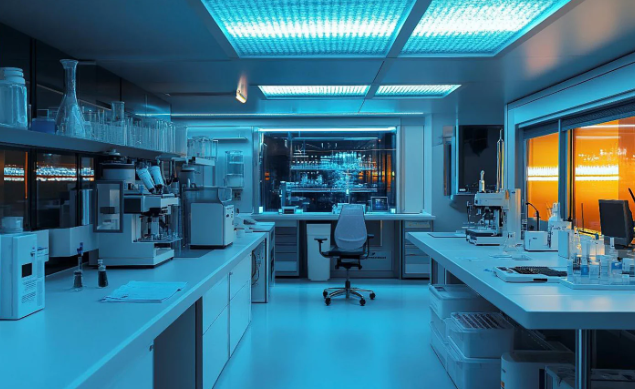
You need dependable lab equipment supplies to run experiments safely, get reliable results, and control costs. Focus on selecting quality essentials—glassware, pipettes, balances, protective gear, and calibrated instruments—and keeping them well-maintained to protect data integrity and staff safety.
This article breaks down which supplies matter most for routine and specialized work, how to prioritize purchases for your budget, and practical maintenance and procurement tips that keep downtime and replacement costs low. Expect clear guidance on choosing trusted vendors, stocking consumables efficiently, and setting simple maintenance routines so your lab operates smoothly.
Essential Lab Equipment Supplies
You need reliable, calibrated tools, protective gear, and organized storage to run experiments safely and reproducibly. Prioritize accuracy for measurements, chemical compatibility for containers, and accessibility for frequently used items.
Glassware and Plasticware
Use glassware for high-temperature work and organic solvents; borosilicate glass (e.g., Pyrex) resists thermal shock and many chemicals. Keep beakers, Erlenmeyer flasks, volumetric flasks, and round-bottom flasks in graded sizes (10 mL–2 L) so you can scale reactions and transfers without excessive loss.
Choose plasticware when breakage or cost is the main concern: polypropylene and HDPE resist many acids and bases, while polystyrene suits disposable cell culture plates and pipette tip racks. For precise liquid handling, use calibrated volumetric pipettes and graduated cylinders; reserve plastic graduated cylinders for routine volume checks, not critical assays.
Inspect for chips, scratches, or clouding before use. Label glass and plastic with solvent-resistant markers or coded tape. Replace any item that compromises seal integrity or measurement accuracy.
Measuring Instruments
Calibrated balances, pH meters, and pipettes form the backbone of quantitative work. Use an analytical balance with at least 0.1 mg readability for small-mass determinations and a top-loading balance for routine sample prep; perform daily or weekly checks with certified weights.
Maintain a pipette fleet covering 0.2–10 µL, 2–20 µL, 20–200 µL, and 100–1000 µL, and follow a regular calibration and service schedule. For pH, keep a combination electrode and perform two-point calibrations before critical measurements; store the electrode in the recommended solution.
Include temperature probes, thermometers, and timers for process control. Log calibration dates, performance checks, and any repairs in an instrument register so you can trace data back to instrument status.
Safety Equipment
Protective equipment and emergency response supplies reduce risk and ensure compliance. Stock chemical-resistant gloves (nitrile for most tasks; neoprene or butyl for strong solvents), safety goggles that seal around the face, and lab coats with proven flame resistance if you work with heat or flammable reagents.
Install and maintain engineering controls: certified chemical fume hoods for volatile or toxic vapors, biosafety cabinets for biological manipulations, and eye wash and safety showers within required travel distances. Keep spill kits tailored to acids, bases, and solvents; include absorbents, neutralizers, and labeled waste containers.
Post clear PPE requirements and emergency numbers at workstations. Train personnel on correct glove selection, hood use, and spill procedures, and document training sessions.
Storage and Organization
Proper storage preserves reagents and speeds workflow. Use chemical cabinets separated by compatibility: flammables in ventilated, rated cabinets; corrosives in corrosive-resistant cabinets; and oxidizers isolated from organics. Store solvents in secondary containment trays to catch leaks.
Label shelves with contents and hazard class. Maintain an inventory system—digital or physical—that records location, lot number, concentration, and expiration date to avoid wasted reagents and failed experiments. Use clear, stackable bins for small consumables like pipette tips, microtubes, and tubing; keep frequently used items at eye level.
Control environmental conditions for sensitive materials: refrigerated storage at 4 °C for enzymes, -20 °C or -80 °C freezers for long-term biologicals, and desiccator cabinets for hygroscopic salts and reagents.
Purchasing and Maintenance of Lab Equipment Supplies
You should prioritize reliable vendors, documented quality, and a clear maintenance plan to keep instruments accurate and available. Focus on supplier credentials, compliance records, and scheduled calibration to reduce downtime and compliance risk.
Selecting the Right Suppliers
Choose suppliers that offer traceable certificates of conformity, warranty terms, and on-site service options. Prefer vendors with ISO 9001 or similar accreditation, a demonstrated supply chain for reagents and consumables, and fast shipping or local stock to avoid experiment delays.
Compare total cost of ownership, not just unit price. Include delivery lead times, installation fees, spare-part availability, and training costs in your evaluation. Use a checklist when qualifying suppliers: certifications, references from similar labs, service SLAs, and return policies.
Negotiate contracts that lock in lead times and pricing tiers for recurring items. Ask about calibration services, preventative maintenance plans, and emergency response times. Keep at least two approved vendors for critical items to prevent single-source disruptions.
See also: Benefits of Smart Technology
Quality Assurance and Compliance
Maintain documented acceptance testing for all incoming equipment and critical consumables. Record serial numbers, lot numbers, and incoming inspection results in your asset or LIMS to support traceability and audits.
Follow applicable standards: OSHA and local biosafety rules for safety equipment; CLIA, ISO/IEC 17025, or GLP where testing accreditation applies. Keep certificates of analysis (CoA) for chemicals and reagents, and archive supplier calibration certificates for instruments.
Implement a change-control process for replacing components or suppliers. Validate new lots of consumables with side-by-side testing before full use. Use logs and electronic records to demonstrate routine checks and corrective actions during inspections.
Routine Care and Calibration
Create daily, weekly, and monthly checklists for each instrument class (e.g., benchtop centrifuge, pipettes, HPLC). Include visual inspection, cleanliness, function checks, and simple performance tests you can perform without vendor service.
Schedule calibration according to manufacturer recommendations and regulatory requirements. For pipettes and balances, document calibration dates and results; for complex analyzers, contract accredited service providers and retain traceable standards used during calibration.
Track maintenance tasks and downtime in a CMMS or spreadsheet with alerts for upcoming services. Keep basic spare parts and consumables on-site (filters, seals, fuses) to reduce interruptions. Train staff to perform routine care and to escalate faults promptly to prevent cascading failures.