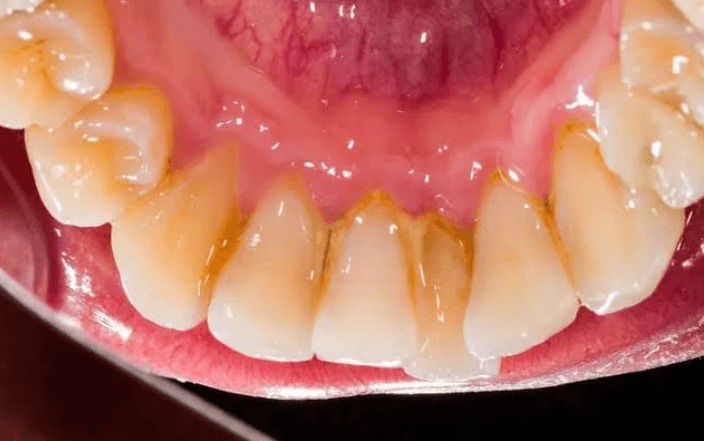
You brush, you floss when you can, and then one day you notice a rough ridge behind your bottom front teeth that does not come off. Maybe your hygienist at a family dental office in Riverview pointed it out at your last visit, or maybe your gums have started bleeding there and you are wondering if you missed something obvious. That spot worries a lot of people because it feels stubborn, looks unpleasant, and tends to sit in a place you cannot see well in the mirror.
How family dentists evaluate calcium buildup behind the lower front teeth usually comes down to three things. They check whether the deposit is hardened plaque, how much of it is sitting above and below the gumline, and whether it has already irritated the gums or supporting bone. That hardened material is often called tartar or calculus. It cannot be brushed away once it hardens, and it shows up behind the lower front teeth often because saliva ducts empty nearby, feeding mineral deposits in that area.
Calcium buildup behind lower front teeth often starts with plaque and saliva minerals
The buildup itself is not pure calcium from your diet lodging in your teeth. It starts as plaque, a sticky film of bacteria. When plaque sits too long, minerals in saliva harden it into tartar. The lower front teeth are common targets because the salivary glands under the tongue release mineral rich saliva right there. If you have crowded teeth, a retainer, dry mouth, or a habit of missing that area when brushing, the process speeds up.
You may feel embarrassed when a small rough patch turns into a thick ledge. That reaction is common, but it does not mean you have done something terrible. Some people build tartar fast even with decent home care. Others go longer without much buildup. Your family dentist looks at your daily habits, your bite, the spacing of your teeth, your gum health, and how your body tends to produce plaque and calculus.
A family dentist tartar assessment is not just a quick glance. The exam usually includes visual inspection, a dental explorer to feel rough deposits, and gum measurements around the teeth. If the gums look puffy, bleed easily, or have started to pull away, your dentist may recommend X rays to see whether the buildup has contributed to bone loss. The Centers for Disease Control and Prevention explains how gum disease can begin quietly and progress if plaque and tartar stay in place. You can read more about gum and periodontal disease.
Family dentist exams focus on the deposit, the gums, and the tissue underneath
When dentists evaluate calculus behind the lower front teeth, they are asking a few direct questions. Is the deposit thin and limited to the visible tooth surface, or has it crept below the gums. Are the gums inflamed because bacteria are sitting on that rough surface. Is there recession, looseness, bad breath, or tenderness that points to a deeper cleaning need.
If the tartar is only above the gumline, a routine cleaning may be enough. If it extends below the gums, the plan may shift to scaling and root planing, which is a deeper cleaning used to remove deposits from root surfaces. That difference matters because hidden buildup can keep irritating the gums even after the visible part is removed.
There is also a practical reason dentists pay close attention to this location. Lower front teeth are smaller, roots can be narrow, and gum recession in that area can leave teeth looking longer or feeling sensitive. Catching buildup early helps protect both comfort and appearance.
Good home care still matters. The National Institute of Dental and Craniofacial Research offers clear guidance on oral hygiene habits that help reduce plaque before it hardens. Once tartar forms, though, brushing harder usually makes things worse by irritating the gums without removing the deposit.
Professional evaluation works differently from scraping at home
People do try to chip tartar off at home with picks bought online. It is easy to understand why. The deposit feels close enough to reach, and the idea of saving time or money is tempting. The problem is that sharp tools can cut the gums, scratch enamel, or leave part of the deposit below the gumline where you cannot see it. A rougher tooth surface then attracts more plaque.
calculus removal by a dentist is controlled, measured, and tied to a full exam. The dentist or hygienist can tell whether what you feel is tartar, stain, a bonded retainer edge, worn tooth structure, or recession exposing root surfaces. Those all feel different in the mouth but can seem similar at home.
| Approach | What It Can Do | Main Limits or Risks |
|---|---|---|
| Brushing and flossing at home | Removes soft plaque before it hardens | Does not remove established tartar |
| At home scraping tools | May remove a tiny visible fragment | Can injure gums, scratch teeth, and miss buildup below the gums |
| Routine professional cleaning | Removes tartar above the gumline and reviews gum health | May not be enough if deposits extend deeper |
| Deep cleaning | Removes tartar from root surfaces below the gums | Usually needed when gum pockets or inflammation are present |
If you are wondering whether the buildup could mean something more serious, that is a fair concern. Large deposits can contribute to gingivitis and periodontitis over time. MedlinePlus has a useful overview of dental plaque and tartar, including why regular removal matters.
Simple next steps help you protect the lower front teeth
Book an exam before the area gets more irritated. If the surface feels rough, your gums bleed there, or you notice bad breath that lingers, schedule a visit. A family dentist can tell whether you need a routine cleaning or a deeper periodontal evaluation.
Clean that area gently and consistently. Angle a soft toothbrush toward the gumline behind the lower front teeth and use small strokes. Floss or use interdental aids if the teeth are tight or crowded. The goal is to disrupt plaque every day, not scrub aggressively.
Pay attention to patterns that speed buildup. Dry mouth, mouth breathing, crowded lower incisors, tobacco use, and long gaps between cleanings all raise the odds that tartar returns quickly. If buildup keeps coming back fast, mention that during your visit so your care plan can match your risk.
See also: How Trucking and Bus Accident Claims Require Deeper Investigation
Early evaluation keeps a stubborn spot from turning into a bigger problem
That rough strip behind the bottom front teeth is common, and it is treatable. The value of seeing a family dentist is not just getting the tartar off. It is finding out how deep it goes, whether your gums have been affected, and how to keep the same area from flaring up again. If you have noticed calcium buildup behind your lower front teeth, schedule a dental visit and get a clear answer before irritation turns into damage.