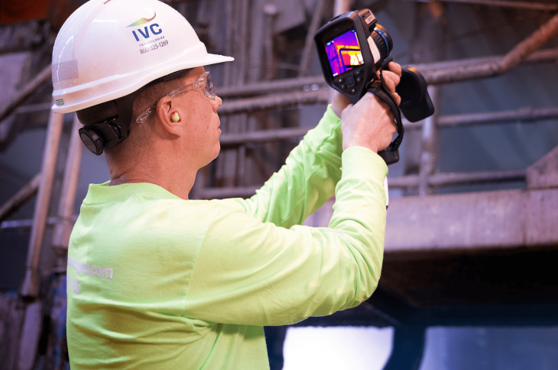
Ensuring that the facilities are safe involves more than simply conducting visual checks.
Most of the developing problems usually go unnoticed until they cause equipment
malfunctions or safety problems in the facilities. Through infrared (IR) thermography,
abnormal thermal patterns can be detected to prevent future major problems from
developing. It is used to gather information about the facilities by taking thermal pictures of
the building without disturbing the ongoing processes. Thermal imaging is useful in making
informed maintenance decisions since it avoids unnecessary downtime.
Detect Hidden Electrical Hazards Before They Escalate
Electrical systems experience problems which may be very difficult to detect by using the
naked eye. Loosely connected components, overloaded electrical circuits, deteriorated
insulation, and imbalanced load cause the generation of unnecessary heat before any
damage becomes apparent. Thermal imaging allows technicians to spot any abnormal
temperatures within an electrical system without disassembling any of the electrical
components. This makes the process of maintenance easy and helps in minimizing
unplanned breakdowns, costly repairs, or even electrical fires. It is also possible for
scheduled thermal scans to help establish whether repairs done have been successful since
temperature levels go back to normal.
See also: How General Dentistry Protects Oral Health Across Every Stage Of Life
Improve Mechanical Equipment Reliability
Machinery wears out over time, leading to increased friction and heat production. Bearings,
motors, pumps, conveyors, and other rotating equipment are known to have elevated
temperatures when their components start wearing out. IR thermography is a technology
that helps the technician detect these symptoms while the machine is still running without
unnecessary downtime. Early detection of overheated components helps in replacing them
before they cause any damage to the machinery. Not only does this help increase the
longevity of the machinery but also minimize unnecessary maintenance costs. Moreover,
thermal imaging helps maintain effective maintenance schedules by recognizing whether
high temperatures are due to normal operations or a problem with the machinery.
Track Thermal Performance Across Critical Assets
Monitoring temperature trends provides valuable insight into the long-term health of essential
systems. Comparing thermal images collected during scheduled inspections allows
maintenance professionals to identify gradual changes that may otherwise remain unnoticed.
Facilities can invest in infrared thermography inspection to ensure equipment continues
operating efficiently while detecting developing issues before they interrupt production. The
historical thermal data can be utilized for data-driven maintenance planning, as it allows
decision-makers to identify trends, assess repairs, and more efficiently allocate maintenance
resources. Continuous monitoring of performance can also enhance the accuracy of
forecasts since such data indicates which parts are close to failing. Instead of dealing with
unforeseen failures, organizations get the opportunity to anticipate maintenance needs
through thermal data.
Strengthen Building Safety and Energy Efficiency
In addition to being used for industrial machinery, IR thermography goes further by
highlighting problems that are not visible within commercial and residential buildings.
Thermography reveals any problems such as insulation flaws, moisture penetration, airflow,
roof problems, and heating/cooling efficiency problems without tearing apart walls or
ceilings. In this way, it will help to fix any problems that may arise within buildings before
they cause any damage to the structure or waste energy. The discovery of moisture
prevents any mold growth, which makes the indoors healthier. The owners of buildings can
enjoy improved
Support Compliance and Preventive Maintenance Programs
The conduct of a safety audit usually necessitates providing evidence in the form of
documentation proving the fact that the important systems undergo evaluation on a regular
basis. The use of infrared thermography provides objective thermal data which helps to
bolster the maintenance documentation and facilitates compliance activities in different
industries. In addition, comprehensive thermal reports offer visual proof of the inspected
equipment, the anomalies discovered, the proposed remedial measures and further
validation after the repair process. This method will enhance communication between
maintenance staff, safety officers, insurers and other regulatory parties involved. Moreover,
the inclusion of thermal inspections in preventive maintenance schedules will promote a
Thermal imaging has emerged as a key instrument for enterprises aiming for greater
efficiency and safety through the use of non-destructive inspection techniques. Thermal
surveys conducted on a regular basis allow maintenance departments to detect any
emerging problems in their early stages, thus preventing potential failures or accidents. With
reliability being a key goal for facilities, infrared thermography serves as a viable solution.