Corrosion eats through tubing systems faster than most engineers expect. One day, your piping runs fine. The next week, you’re dealing with leaks, contamination, or worse—a full system shutdown. Chemical processing environments don’t forgive material selection mistakes.
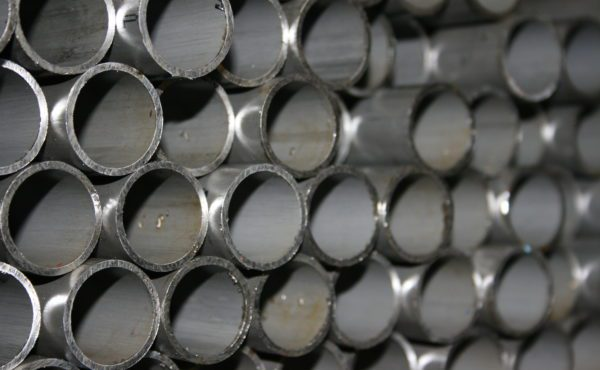
Nickel Alloy 20 tubing offers a solution for handling sulfuric acid and other aggressive chemicals. But knowing when to specify it requires understanding what makes this material different from standard stainless steel options.
What Makes Nickel Alloy 20 Different
Nickel Alloy 20 tubing contains roughly 33% nickel, 20% chromium, and 2.5% copper. The copper addition sets it apart from typical stainless grades. This specific composition creates resistance to sulfuric acid across a wide concentration range.
The material also includes small amounts of molybdenum and niobium. These elements prevent intergranular corrosion during welding and thermal cycling. Most stainless steels struggle with this type of degradation in chemical service.
Perhaps the biggest advantage shows up in mixed-acid environments. Alloy 20 handles sulfuric acid, phosphoric acid, and nitric acid combinations better than 316 stainless steel. Your system stays intact when multiple corrosive agents interact.
Where Standard Materials Fail
Type 316 stainless steel works fine for many applications. But expose it to sulfuric acid above 10% concentration, and corrosion rates climb fast. The material degrades even faster at elevated temperatures.
Chemical processors know this fear well. A failed tube means product contamination, emergency repairs, and production losses. Some plants lose thousands of dollars per hour during unplanned shutdowns.
Here’s the problem: many operations start with 316 stainless because it costs less upfront. Then they replace corroded tubing every few years. The cycle repeats until someone calculates the real cost of constant maintenance.
Sulfuric Acid Service Applications
Nickel Alloy 20 tubing handles sulfuric acid at concentrations from 20% to 90%. This range covers most chemical processing operations. The material performs well at temperatures up to 150°F in these environments.
Phosphoric acid production relies heavily on Alloy 20 systems. The tubing resists both the acid itself and the sulfuric acid used in processing. Temperature fluctuations during production don’t compromise the material’s protective oxide layer.
You’ll also find Alloy 20 in synthetic fiber manufacturing. These operations use sulfuric acid for polymer processing. Contamination from corroded tubing ruins product quality and creates safety hazards.
Chemical Composition Details
The exact composition matters for predicting performance. Alloy 20 typically contains 32-38% nickel, 19-21% chromium, and 3-4% copper. Iron makes up the balance, with carbon kept below 0.07%.
Molybdenum content ranges from 2-3%. This element boosts resistance to pitting and crevice corrosion. Niobium stabilizes the material against sensitization during welding.
Some specifications call for Alloy 20Cb-3, which has tighter composition controls. The designation refers to niobium (formerly called columbium) content. Both versions resist sulfuric acid well, but Cb-3 offers better weldability.
Temperature and Concentration Limits
Every material has boundaries. Alloy 20 resists sulfuric acid best between 60°F and 150°F. Below 60°F, some concentrated acid solutions become more aggressive. Above 150°F, corrosion rates increase significantly.
Concentration also affects performance. The material handles 20-90% sulfuric acid reliably. Dilute acids below 20% can be more corrosive because they contain more dissolved oxygen. Concentrated acids above 90% require different alloys.
Mixed contaminants change the equation, too. Chlorides accelerate pitting, even in Alloy 20. If your process fluid contains chloride ions above 500 ppm, you need to reconsider material selection.
Comparing Alloy 20 to Alternatives
Type 316L stainless steel costs less but fails quickly in sulfuric acid service. Nickel Alloy 20 lasts years longer in the same conditions. The higher initial cost pays back through extended service life.
Hastelloy C-276 offers better corrosion resistance than Alloy 20. But it costs roughly twice as much. For many sulfuric acid applications, Alloy 20 provides enough protection without the premium price.
Sometimes, titanium makes sense for highly oxidizing acids. But sulfuric acid environments often lack sufficient oxidizing potential for titanium’s passive film to form. Alloy 20 works reliably in both oxidizing and reducing conditions.
See also: Why Businesses Still Trust .NET: A Deep Dive into Framework Loyalty
ASTM Standards and Specifications
ASTM B729 covers Alloy 20 welded tubing. This specification defines composition limits, mechanical properties, and testing requirements. Most chemical processing applications reference this standard.
ASTM B464 applies to Alloy 20 seamless pipe and tube. Seamless construction eliminates weld seams that might be vulnerable to corrosion. Some critical applications require seamless tubing despite higher costs.
Both standards require similar composition ranges. The main difference lies in the manufacturing method and dimensional tolerances. Your application determines which specification works best.
Mechanical Properties to Consider
Alloy 20 tubing has a minimum tensile strength of 80,000 psi. Yield strength typically exceeds 35,000 psi. These values support structural requirements in most piping systems.
The material remains ductile across normal operating temperatures. Elongation values usually exceed 30% in tensile testing. This ductility helps during installation and reduces crack formation.
Hardness readings fall between 160 and 220 Brinell. The relatively soft material machines easily but still resists wear in fluid handling applications. Hard water scales and suspended particles cause less erosion than in harder alloys.
Final Thoughts
Your chemical processing system depends on materials that survive harsh conditions. Nickel Alloy 20 tubing handles sulfuric acid and mixed-acid environments where standard grades fail. The material costs more upfront but delivers years of reliable service without constant replacement cycles.