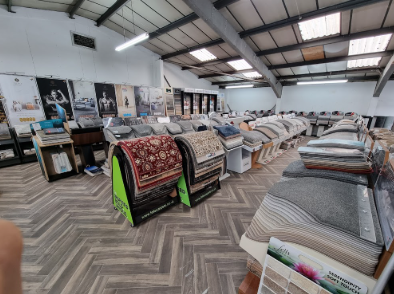
Searching “carpet store near me” should give you nearby options, prices, and installation services so you can pick a local shop that fits your timeline and budget. Start by narrowing stores by location, product selection, and whether they offer measuring and professional installation — that combination saves you time and avoids surprises.
You’ll learn how to compare materials, warranties, and service packages so you choose durable carpet that matches your home and lifestyle. The article walks through evaluating stores, understanding installation options, and getting accurate quotes so you feel confident moving from sample to finished floor.
Choosing the Right Carpet Store Near Me
You want a local carpet store dealer that balances trusted installation, a wide range of brands, and staff who can match products to your room’s wear, budget, and style. Focus on measurable signals: verified reviews, specific brand lines, and the availability of in-store experts and measurement/installation services.
Local Store Reputation
Check recent customer reviews on multiple platforms for specifics: delivery timeliness, installation quality, and how the store handled complaints. Look for mentions of exact installers’ names, warranty follow-through, and whether the store provided on-site measurements or recovered from mistakes quickly.
Verify business credentials: local business license, Better Business Bureau rating (or national equivalent), and manufacturer dealer certifications. Ask whether the store is locally owned or a national chain; local ownership often means faster follow-up, while chains may offer standardized warranties and broader inventory.
Visit the store and inspect completed-job photos or ask for references from nearby customers. Note showroom condition and sample availability—clean, well-organized displays and ample samples indicate professional operations and attention to detail.
Product Selection and Brands
Prioritize stores that stock multiple tiers: entry-level stain-resistant fibers, mid-range durable carpets (e.g., nylon blends), and premium offerings (wool, high-end nylon or triexta). Confirm exact brand names and model lines rather than vague claims; ask for product data sheets that include fiber content, pile height, and stain warranties.
Ask about in-stock sample sizes and the ability to order free or low-cost large samples for testing in your space. Find out if the store carries compatible padding and underlay options, and whether those are installed by the store or subcontractors.
Compare warranty specifics: what the manufacturer covers versus what the store guarantees. Look for clear return policies, installation guarantees, and whether the store will handle warranty claims on your behalf.
See also: flow: What Is a Workflow in Business Process Management
In-Store Expert Guidance
Bring room dimensions, photos, and notes on pets, foot traffic, and desired maintenance when you consult staff. A qualified salesperson or flooring consultant should walk you through fiber choices, stain treatments, pile types, and realistic lifespan estimates based on your usage patterns.
Ask if the store offers on-site measuring and whether that service is complimentary with purchase. Confirm installation crews’ qualifications, their typical lead time, and whether they provide a written installation estimate that itemizes labor, materials, and waste allowance.
Request a written plan: recommended product, pad, estimated timeline, and post-install care instructions. If the expert can’t provide these specifics, consider getting a second opinion from a different local dealer.
Carpet Installation and Services
You’ll find precise measuring, professional installation, and dependable after-sales support that protect your investment and ensure the carpet performs as expected. Expect on-site assessment, expert fitting with proper tools, and follow-up care such as warranty registration or touch-up visits.
Measuring and Customization
A technician will visit your home to take exact measurements of each room, including alcoves, closets, and stair runs. They’ll note door swings, transitions to other floors, and subfloor conditions so the carpet and padding fit flush and seams sit in low-traffic areas.
You can request custom cuts, pattern matching, and carpet direction (pile run) to control appearance and wear. The store should provide a detailed materials list showing yardage, seam locations, underpad type and thickness, and estimated waste percentage so you know what’s being ordered.
If you have special needs—pet-resistant fibers, stain warranties, or commercial-grade backing—ask for samples to test under your lighting. Confirm lead times for custom orders and any additional charges for irregular rooms or removal of old flooring.
Professional Installation
Certified installers arrive with tools: knee kickers, power stretchers, seam irons, and tack strips. They remove baseboards only if agreed, install appropriate underpad, stretch the carpet to prevent ripples, and trim edges for a snug finish against thresholds and trim.
A clear installation timeline helps you plan. Typical single-room installs take 2–4 hours; multi-room or stairs add time. Ask whether installers will move furniture, protect other surfaces, or provide dust control during cutting.
Verify installer credentials and insurance before work begins. Request a written scope that lists prep work (subfloor repair, moisture tests), warranty coverage for workmanship, and a final inspection checklist so you know what acceptance criteria they’ll use.
After-Sales Support
Good stores offer a workmanship warranty and help with manufacturer stain or fiber warranties; get both in writing. They often provide a follow-up visit to inspect seams, tack strips, and transitions within a set period—commonly 30–90 days.
Keep documentation: receipts, warranty cards, and installers’ names. That speeds service if issues arise like delamination, unexpected wear, or seam separation. Many retailers also offer maintenance plans—scheduled cleanings, spot-treatment kits, and guidance on vacuuming frequency and spot removal.
If repairs are needed, ask about response time and whether they use original installers or certified repair technicians. Confirm any fees for callbacks and whether service visits count toward or are excluded from the warranty.