You want ACM panels installed correctly to protect your building and get the look you expect. Choose an installer who combines tested attachment systems, fire-safe materials, and precise fabrication to guarantee a durable, code-compliant finish.
This article breaks down what skilled ACM panel installers do, how installation methods and fabrication affect long-term performance, and which selection criteria matter most when you hire a team. Expect practical guidance so you can compare bids, verify qualifications, and avoid common pitfalls that add cost or risk.
You’ll learn how installers’ experience with wet vs. dry systems, material sourcing, and national-standard attachment assemblies impacts project timelines and maintenance needs.
Understanding ACM Panel Installers
You will learn who performs ACM installations, the certifications and training they typically hold, and the specific responsibilities they manage on-site to ensure a safe, weather-tight, and code-compliant facade.
What Is an ACM Panel Installer?
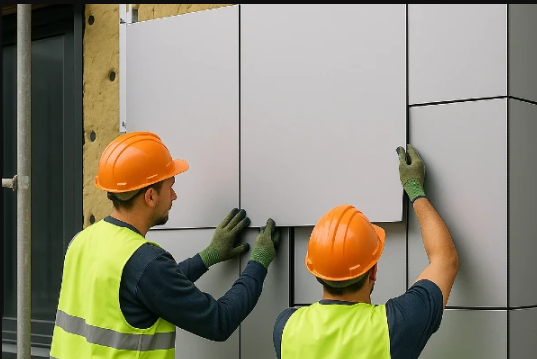
An ACM panel installers are tradesperson or crew specialized in mounting aluminum composite material (ACM) panels as part of exterior cladding systems. You should expect installers to work with rainscreen assemblies, subframing systems (aluminum or steel), and weather-resistant barriers to create a ventilated facade.
They handle both prefabricated shop-cut panels and field-trimmed pieces, aligning joints, fasteners, and perimeter flashings to meet design tolerances. Installers coordinate with fabricators, glaziers, and general contractors to sequence deliveries, hoisting, and sealant application.
Typical projects include commercial façades, high-rise exteriors, canopies, and signage. You should verify an installer’s experience with panel types, joint profiles, and finish compatibility to avoid fit or finish problems.
Training and Certification Requirements
You should look for installers who complete manufacturer-specific training and documented installation programs. Many ACM manufacturers and system suppliers provide courses covering panel handling, substrate preparation, fixing systems, and warranty conditions.
Certifications often include proof of completion for fall protection, scaffold use, and rigging because ACM work involves elevated access. Local jurisdictions may require licensed contractors for exterior cladding work and hold installers to building code and fire-safety standards, especially for high-rise applications.
Request copies of training records, product-specific certificates, and proof of insurance. These documents show the installer understands thermal movement, fastener spacing, ventilated cavity requirements, and substrate detailing that affect long-term performance.
Key Responsibilities in ACM Installation
You can expect installers to manage pre-install checks, site layout, and substrate preparation as primary responsibilities. They must verify substrate flatness, anchorage locations, and compatible weather barrier installation before attaching subframing or brackets.
On installation day, crews perform precise panel placement, secure mechanical fasteners or concealed clips per shop drawings, and seal joints and penetrations with specified sealants. Quality control tasks include measuring for panel squareness, checking reveal widths, and documenting fastener torque or clip engagement.
Installers also handle damage prevention, touch-up of factory finishes where allowed, coordination of expansion joints, and adherence to manufacturer tolerances to maintain warranties. You should require post-install inspection records and as-built layouts for future maintenance and warranty claims.
See also: flow: What Is a Workflow in Business Process Management
Choosing the Right ACM Panel Installer
You need an installer who delivers precise fit, weather-tight detailing, and on-time coordination with your trades. Focus on demonstrable project experience, strict adherence to code and manufacturer requirements, and current insurance and licensing.
Assessing Experience and Portfolio
Ask for at least three recent projects similar in scope, material, and complexity to yours. Review photos and shop drawings to confirm they handled panel joint systems, rainscreen attachments, and transitions around windows and penetrations.
Request references you can contact and ask specific questions: Did the installer follow manufacturer tolerances? Were there field modifications? How was punchlist response time? A history of commercial façades, multi-color layouts, or column cladding matters more than a long but irrelevant resume.
Confirm in-person or virtual site visits where possible. Seeing completed work and details—corner returns, fastener patterns, flashings—lets you judge workmanship and longevity.
Evaluating Industry Standards Compliance
Verify the installer uses manufacturer-approved installation methods and follows applicable standards like NFPA, local building code fire performance requirements, and recognized rainscreen details. Ask for documentation: installation manuals referenced, shop drawing submittals, and mock-up approvals.
Check whether they perform project-specific testing: mock-up inspections, air/water infiltration tests, and thermal movement detailing. Confirm compatibility statements if you specify a particular ACM product and that they adhere to specified finish handling and storage procedures.
Insist on written procedures for QA/QC, including site supervision frequency and recordkeeping for fastener torque, sealant bead sizes, and substrate preparation.
Verifying Insurance and Licensing
Require current proof of liability insurance with limits appropriate to project size—typically general liability and umbrella coverage—and name you and the owner as additional insureds. Confirm workers’ compensation coverage for all on-site personnel to avoid wage claim liability.
Ask for copies of contractor licenses and any specialty certifications for metal façade work in your jurisdiction. Verify expiration dates and check for outstanding disciplinary actions with local licensing boards.
Include these requirements in the contract: insurance certificates, license numbers, and a clause that mandates updated documentation before mobilization.