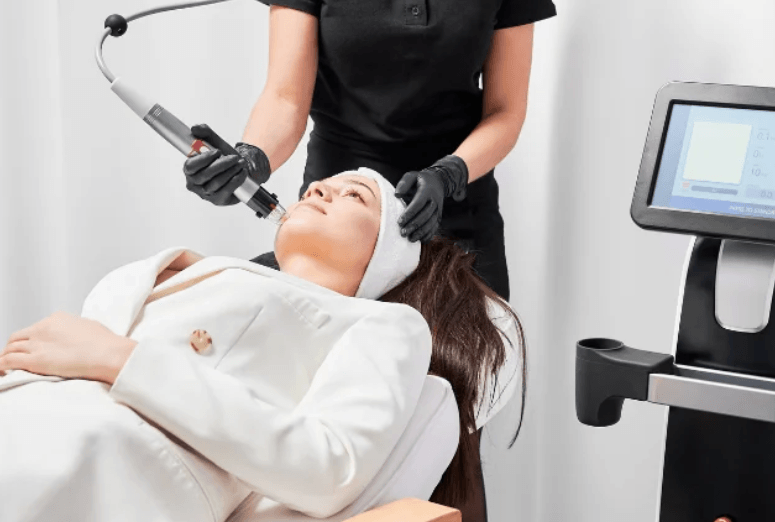
You might notice it first in a selfie or on a video call. Your face looks fine, but your neck tells a different story. Fine lines across the front, crepey skin that seems to crumple when you tilt your head down, maybe even deeper folds that were not there a few years ago. You start wondering if all those hours looking down at your phone or laptop have finally caught up with you—maybe it’s time to explore options at a med spa Newtown PA.
If you feel a mix of frustration and regret, you are not alone. Many people feel betrayed by their neck and chest area long before they see major changes in their face. You may be careful with skincare, sunscreen, even diet, yet the skin from your chin to your collarbone still looks older than you feel. That disconnect can be surprisingly emotional. You might feel self conscious in photos, hide behind high collars, or avoid certain angles on video.
Because of this, you might be asking a very practical question. Can a med spa really help with tech neck lines and that thin, crepey skin, or is it just clever marketing? The short answer is yes, medical spas have tools that can improve the look and feel of your neck and chest, often without surgery, but the right approach depends on what is actually happening in your skin.
So, where does that leave you right now. You are likely looking for clear, honest guidance about what is possible, what is safe, and what is worth your time and money.
What is “tech neck” and why does the skin start to look crepey?
Tech neck is not just a catchy phrase. It describes the way repeated downward head posture and long hours on devices can affect both the spine and the skin of your neck. According to research shared by the University of Alabama at Birmingham, constant flexing of the neck while looking down at phones and screens increases strain on the neck and can contribute to discomfort and posture changes over time. You can read more about that posture issue in this UAB explainer on tech neck and device use.
On the skin level, a few things come together.
First, repeated folding of the neck when you look down can deepen horizontal lines that may already exist from natural movement. Second, sun exposure to the neck and chest often gets less protection than the face. That leads to thinner, drier, more fragile skin. Third, as collagen and elastin decline with age, the skin loses its snap. This is when skin starts to look “crepey” and finely wrinkled, especially when you move.
When you put all of this together, you get what many people call tech neck treatment for lines and crepey skin. It is not just about one wrinkle. It is about a pattern of changes that make the neck and chest look older, tired, or uneven compared with the face.
Why tech neck lines feel more stressful than “just wrinkles”
The problem is not only what you see in the mirror. It is also what it makes you feel. You might catch yourself adjusting camera angles on every video meeting or re shooting photos to hide your neck. That constant self monitoring can be draining.
There is also the financial worry. You might have tried multiple neck creams, gadgets, and “miracle” serums with minimal change. The money adds up. You start to wonder if professional neck wrinkle treatment at a med spa will be any different, or if you are about to waste even more.
Finally, there is the question of safety. You may have heard about injectables, lasers, peels, and energy devices. Some sound promising, others sound intimidating. You want improvement, but you do not want to look “overdone” or take on unnecessary risk.
So, what can a med spa realistically do for tech neck and crepey skin, and how do you sort through all the options without feeling overwhelmed.
How med spas approach tech neck lines and crepey skin
A medical spa is typically supervised by a medical professional and offers treatments that go deeper than basic spa facials. For neck lines and crepey skin, most med spas create a plan that combines a few different tools. Think of it as layering support instead of expecting one magic fix.
Here are some of the core approaches you might hear about.
1. Collagen stimulating treatments
These treatments aim to encourage your skin to produce more collagen so it becomes thicker, smoother, and more resilient over time. They can include:
- Microneedling, sometimes with radiofrequency, to create controlled micro injuries that trigger collagen repair.
- Non ablative lasers or light based treatments that gently heat the deeper layers of the skin.
- Biostimulatory injectables that encourage new collagen in the neck and chest.
Results are usually gradual. You might notice softer lines and firmer skin over several months rather than overnight.
2. Skin resurfacing for texture and fine lines
If the skin looks finely wrinkled and rough, resurfacing treatments may help. These can include:
- Light to medium chemical peels designed for the neck and chest.
- Fractional laser treatments that address texture and pigment.
These treatments remove or remodel the outer layers of skin, which can improve crepiness and discoloration. They usually involve some social downtime, like redness or flaking.
3. Injectables for specific neck lines
Some horizontal neck lines respond to carefully placed dermal fillers or micro droplets of skin boosters that hydrate and smooth the area. Vertical neck bands from muscle activity can sometimes be softened with tiny doses of neuromodulators that relax the muscle pull.
The U.S. Food and Drug Administration notes that many wrinkle treatments and anti aging products have specific, approved uses and that marketing claims should not promise more than what is proven. For a grounded overview of how the FDA views wrinkle treatments, you can review their page on wrinkle and anti aging products. This kind of information can help you ask better questions at a med spa and understand which treatments are being used on label and which are considered off label.
4. Medical grade skincare to support results
Even the best procedures need support. Many med spas recommend neck specific skincare with ingredients like retinoids, peptides, and sunscreen to maintain and enhance your results. This is especially important for the thin skin of the neck and chest.
See also: Lawn Care in Mississauga: Expert Seasonal Tips for a Healthy Yard
Professional help vs at home care for tech neck lines
You might be torn between continuing with at home efforts and investing in professional neck rejuvenation at a med spa. The comparison below can help clarify where each approach fits.
| Approach | What it involves | Typical benefits | Limitations |
|---|---|---|---|
| At home skincare and lifestyle | Neck creams, sunscreen, retinoids, posture changes, device breaks | Protects skin from further damage. May soften very early lines and improve hydration. Supports any professional treatment. | Cannot fully reverse deeper wrinkles or significant crepiness. Results are usually subtle and slow. |
| Medical spa treatments | Microneedling, lasers, peels, injectables, energy devices | More visible improvement in lines, texture, and firmness. Can target specific concerns like horizontal rings or neck bands. | Cost, possible downtime, and need for maintenance. Results vary by skin type and treatment choice. |
| Surgical options | Neck lift or lower facelift performed by a surgeon | Most dramatic tightening and reshaping of the neck and jawline. Longer lasting structural change. | Higher cost, anesthesia, recovery time, and surgical risks. Not everyone wants or needs surgery. |
Seeing the options side by side makes it clearer. At home care is essential and ongoing. A med spa neck treatment can move the needle when creams alone are not enough. Surgery is reserved for more advanced sagging or when someone wants a major change.
Three practical steps you can take right now
1. Get honest about your tech habits and posture
Start by reducing the ongoing strain. Hold your phone closer to eye level. Prop up your laptop when possible. Set gentle reminders to take screen breaks and roll your shoulders back. These changes will not erase existing lines, but they can prevent them from deepening and support any treatment you choose later.
2. Upgrade your neck and chest skincare, not just your face
Extend your daily routine beyond your jawline. Use a broad spectrum sunscreen on your neck and chest every morning. At night, apply a gentle retinoid or peptide serum approved for this area, followed by a moisturizer. Be patient. Consistency over several months often makes the skin look smoother and less dry, which can make lines less obvious.
3. Schedule a consultation and ask targeted questions
If you feel that creams are not enough, consider a consultation at a reputable med spa or dermatology office. Bring photos of your concerns in different lighting. Ask which treatments are supported by solid evidence for neck lines and crepey skin. Ask how many sessions are typical, what kind of downtime to expect, how long results usually last, and what the total cost range might be. A good provider will welcome your questions and help you weigh the pros and cons of each option rather than pushing a single solution.
Moving forward with more clarity and less pressure
Tech neck and crepey neck skin can feel unfair, especially when you have tried to take care of yourself and still see changes you do not like. It is understandable to feel discouraged or even a bit angry at your phone or laptop. At the same time, you now know that there are thoughtful, layered ways to approach this. From simple changes in posture and sunscreen habits to targeted treatments in a med spa setting, you have options that can be tailored to your comfort level and goals.
You do not need to fix everything at once. Start with one small, doable step. Protect the skin you have today. If and when you are ready, sit down with a qualified provider and explore what kind of neck and chest plan would make you feel more at home in your skin.