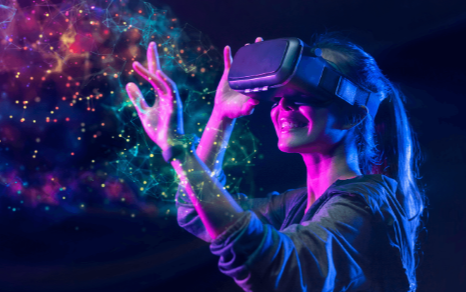
The emergence of Augmented Reality (AR) and Virtual Reality (VR) has transformed the landscape of technology. AR enhances the real world by overlaying digital elements, while VR creates immersive experiences in completely simulated environments. This distinction raises important questions about their unique applications and implications across various industries. Understanding these technologies’ functionalities and potential future developments is crucial. What lies ahead for AR and VR in shaping user experiences?
What Is Augmented Reality and How Is It Applied?
Augmented reality (AR) represents a transformative technology that enhances the real-world environment by overlaying digital information onto it.
This innovation creates augmented experiences, allowing users to interact with their surroundings in unprecedented ways. Applications range from gaming to education, where interactive overlays provide enriched learning opportunities.
What Makes Virtual Reality Unique?
Virtual Reality (VR) stands out as a groundbreaking technology that immerses users in entirely simulated environments, providing experiences that are distinctly separate from the physical world.
This uniqueness lies in its capacity for immersive experiences, engaging multiple senses simultaneously. Through advanced sensory engagement, users can explore fantastical realms, fostering a profound sense of presence and freedom that traditional media cannot replicate, thus redefining interactive entertainment.
Key Differences Between Augmented and Virtual Reality
The distinctions between augmented reality (AR) and virtual reality (VR) are fundamental to understanding how each technology shapes user experiences.
AR overlays digital content onto the real world, enhancing it, while VR creates entirely immersive experiences within a computer-generated environment.
Mixed reality combines elements of both, allowing interaction with virtual objects in the real world, further blurring the lines between these transformative technologies.
Future Industry Applications of AR and VR
How will industries transform with the integration of augmented reality (AR) and virtual reality (VR) technologies?
Future applications promise significant healthcare innovations, enhancing surgical precision through immersive simulations.
Additionally, gaming advancements will redefine entertainment experiences, allowing players to engage in more realistic environments.
As AR and VR become mainstream, diverse sectors will unlock unprecedented opportunities, fostering creativity and collaboration in ways previously unimaginable.
Conclusion
In conclusion, both augmented reality and virtual reality present unique opportunities for innovation across various sectors. For instance, a hypothetical case study involving a medical training program could illustrate the efficacy of AR in enhancing surgical skills by overlaying critical information onto a live patient. Meanwhile, VR could provide immersive simulations for high-risk procedures, allowing surgeons to practice without real-world consequences. As these technologies continue to advance, their convergence may unlock even greater potential for transformative experiences in education, entertainment, and beyond.