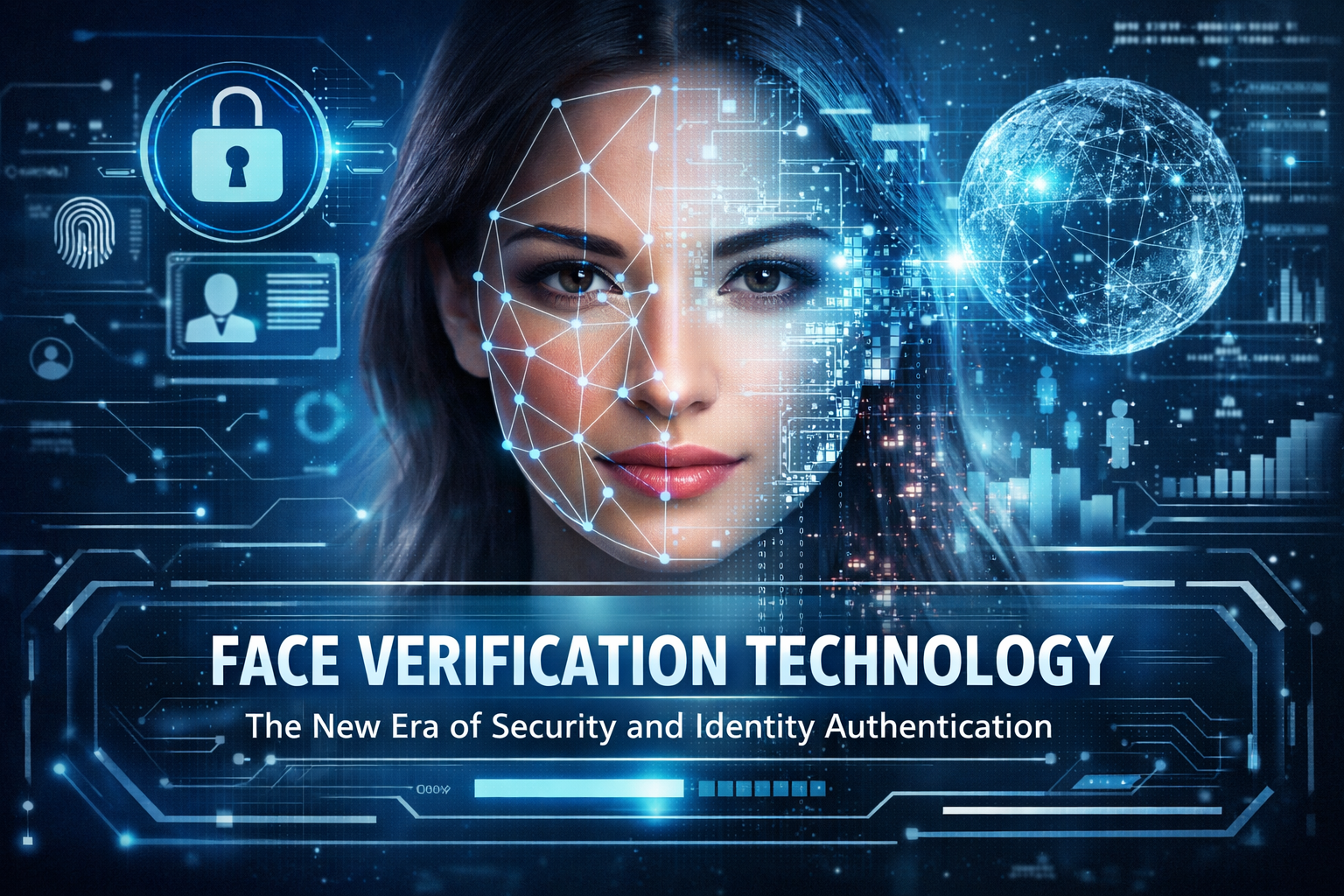
In the past decade, digital security has become one of the most critical concerns for businesses, governments, and individuals. As traditional passwords and PINs increasingly fall short in protecting sensitive information, face verification technology has emerged as a leading solution for secure identity authentication. Leveraging artificial intelligence (AI), machine learning, and biometric analysis, face verification offers a fast, convenient, and highly accurate method of confirming an individual’s identity.
What Is Face Verification?
Face verification is a biometric authentication process that confirms whether a person’s face matches a stored reference image or digital identity record. Unlike face recognition, which identifies a person from a large database, verification is a one-to-one comparison, often used for logging into devices, accessing accounts, or completing secure transactions.
The process typically involves several steps:
- Face Detection: The system first detects a human face within a camera feed or image.
- Feature Extraction: Key facial features such as the distance between eyes, nose shape, and jawline are converted into a unique mathematical representation.
- Matching: The extracted features are compared to stored reference data.
- Verification Result: The system confirms whether the identity matches the stored profile.
This technology is widely implemented in smartphones, online banking apps, border control systems, and enterprise security frameworks.
Why Face Verification Matters in Modern Security
Traditional security methods like passwords or PINs have several weaknesses. They can be stolen, guessed, or shared, leaving users and organizations vulnerable to cyberattacks. Face verification technology reduces these risks because it relies on physical biometric traits that are unique and difficult to replicate.
Additionally, in industries such as finance, healthcare, and e-commerce, verifying a user’s identity accurately is crucial for preventing fraud. Face verification ensures that only authorized individuals can access sensitive information or complete critical transactions. This is especially relevant in online payment authentication, where fraud like identity theft or account takeovers is common.
AI and Deep Learning in Face Verification
Modern face verification systems are powered by AI and deep learning algorithms, which enable systems to analyze faces with remarkable accuracy. Deep learning models can detect subtle facial features, even under challenging conditions like poor lighting, changes in facial expression, or partial obstructions.
These AI models continuously improve over time. As more facial data is processed, the system learns to distinguish between genuine users and spoofing attempts, such as printed photos or video replays. This adaptive learning significantly strengthens security while maintaining a seamless user experience.
Applications of Face Verification Technology
Face verification is no longer limited to high-security environments—it has become part of everyday digital life. Some of the most common applications include:
- Mobile Device Security: Many smartphones now allow unlocking via face verification, replacing PINs and fingerprint sensors.
- Online Banking & FinTech: Banks and fintech apps use face verification to authenticate users during login or high-value transactions.
- Border Control & Travel: Airports and government agencies employ face verification to streamline identity checks and reduce fraud.
- Enterprise Security: Companies use face verification to grant employees access to secure areas or sensitive data systems.
- E-Commerce: Online marketplaces implement face verification to ensure legitimate buyers and sellers, preventing fraudulent activity.
Advantages Over Traditional Authentication Methods
- Convenience: Users no longer need to remember complex passwords or carry physical access cards.
- Accuracy: Modern face verification systems achieve extremely low false acceptance and false rejection rates.
- Fraud Prevention: Biometric authentication is harder to spoof than passwords or PINs, significantly reducing the risk of identity theft.
- Scalability: AI-powered systems can process millions of verifications quickly, making them suitable for large-scale applications.
Challenges and Considerations
While face verification technology offers immense benefits, it also comes with challenges. Privacy concerns are at the forefront, as storing facial data raises questions about data protection and consent. Regulatory compliance with frameworks such as GDPR or CCPA is essential for organizations using face verification.
Another challenge is deepfake attacks and sophisticated spoofing methods. Hackers may attempt to trick systems with AI-generated face images or videos. To combat this, companies implement liveness detection techniques that verify real human movement or depth in facial features.
Moreover, bias in AI models can lead to misidentification, particularly for individuals of certain ethnicities or age groups. Ensuring diverse training datasets and regular audits is critical to maintaining fairness and accuracy.
Read Also: Autonomous Vehicle Technology Explained
The Future of Face Verification
Face verification technology is evolving rapidly. With advancements in AI, edge computing, and secure data storage, we can expect faster, more accurate, and more privacy-conscious systems. Integration with multi-factor authentication—combining biometrics with passwords, OTPs, or behavioral analytics—will make digital interactions safer than ever.
In addition, as digital transactions and remote work continue to grow, face verification will play an increasingly central role in protecting identities online. From mobile banking to secure workplace access, this technology is not just a convenience—it’s a cornerstone of modern digital security.
Conclusion
Face verification technology represents a paradigm shift in the way we secure identities and authenticate users. By leveraging AI, deep learning, and biometric analysis, it offers a fast, accurate, and user-friendly alternative to traditional security methods. While challenges such as privacy concerns, AI bias, and spoofing attacks remain, the benefits of face verification—convenience, fraud prevention, and scalable security—make it a vital tool for individuals, businesses, and governments alike.
As digital ecosystems continue to expand, adopting face verification technology is no longer optional; it is an essential step toward a safer, more secure, and identity-protected future.