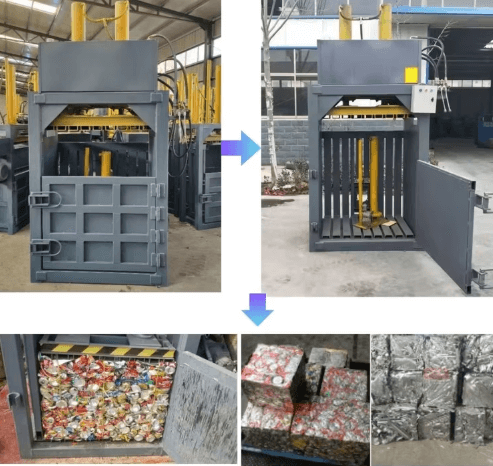
In today’s industrial landscape, efficient waste management is not just a regulatory requirement but also a critical factor in operational efficiency and sustainability. Businesses across manufacturing, packaging, retail, and recycling industries are increasingly turning to advanced solutions to handle the growing volume of waste generated daily. Among these solutions, the vertical baling press has emerged as a key technology that simplifies industrial waste management, optimizes storage space, and enhances recycling efficiency.
A vertical baling press is a machine designed to compress and bind waste materials such as cardboard, paper, plastics, textiles, and other recyclables into compact bales. These bales are easier to handle, transport, and store, reducing both labor and logistics costs. By automating and standardizing the process of waste compression, vertical baling presses play a significant role in streamlining material handling operations while promoting environmental responsibility.
How Vertical Baling Presses Enhance Industrial Efficiency
Industrial operations generate substantial amounts of packaging materials, scrap, and other disposables that can accumulate quickly. Without effective waste management strategies, these materials occupy valuable floor space, complicate workflow, and increase disposal costs. Vertical baling presses address these challenges by reducing the volume of waste by up to 80%, turning loose materials into compact, manageable bales.
By compressing waste into standardized bales, vertical baling presses improve storage efficiency and make transport more cost-effective. Material handlers can easily stack, load, and move bales using forklifts or pallet jacks, minimizing manual labor and reducing the risk of workplace injuries. In addition, the streamlined process allows recycling partners to handle materials more efficiently, enhancing the overall recycling chain.
Environmental and Sustainability Benefits
The adoption of vertical baling presses contributes directly to environmental sustainability. Compact bales reduce the frequency of waste collection trips, lowering transportation-related carbon emissions. They also enable industries to sort and process recyclables more effectively, ensuring that materials are properly reused or recycled instead of ending up in landfills.
Many modern vertical baling presses are designed to be energy-efficient, using advanced hydraulic systems that consume minimal power while maintaining high compression performance. This combination of operational efficiency and reduced environmental footprint makes vertical baling presses an attractive solution for companies committed to sustainable practices.
Applications Across Industries
Vertical baling presses are versatile machines used across a variety of industries. In the manufacturing sector, they compress scrap materials, defective products, and packaging waste. Retail and distribution centers use them to manage cardboard, plastic wrap, and other packaging materials. Recycling facilities rely heavily on vertical baling presses to create uniform bales for downstream processing, ensuring efficient handling, storage, and transportation.
The adaptability of vertical baling presses allows them to handle different types of materials, from soft plastics to rigid cardboard and paper, providing a cost-effective and flexible waste management solution for a wide range of industrial operations.
Right Baling Machine and Optimized Waste Handling
Right Baling Machine is a term increasingly associated with the precise selection and use of baling equipment tailored to specific industrial needs. Choosing the right vertical baling press ensures that waste materials are compressed efficiently, safety protocols are adhered to, and operational workflows are optimized.
Right Baling Machine strategies include evaluating the type of waste generated, required bale size and density, available floor space, and automation level. By selecting the appropriate vertical baling press and integrating it into daily operations, companies can achieve significant labor savings, maximize floor space, and improve overall waste management efficiency. Maintenance and timely servicing of these machines also play a crucial role in sustaining long-term performance.
Reducing Operational Costs
The use of a vertical baling press reduces operational costs in several ways. By compacting waste, businesses save on storage space and transportation expenses. Reduced waste volume means fewer waste collection trips and lower disposal fees. Additionally, many recyclers offer higher rates for uniform, high-density bales, creating a potential revenue stream for companies that implement efficient baling operations.
Labor costs are also minimized as employees spend less time manually handling loose waste. Automated vertical baling presses with hydraulic compression systems require minimal operator input, further contributing to workforce efficiency. Over time, these operational savings offset the initial investment in high-quality baling equipment, providing a strong return on investment.
Safety Considerations
Workplace safety is a critical concern in industrial environments. Handling loose, bulky waste can pose risks of slips, trips, and lifting injuries. Vertical baling presses address these concerns by automating compression and handling, reducing manual labor, and providing standardized bale sizes that are easier and safer to transport.
Modern machines include safety features such as interlocking doors, emergency stop buttons, overload protection, and automated cycle controls. These safety measures ensure that operators can use vertical baling presses without compromising personal safety or productivity.
Leading Companies Providing Vertical Baling Press Solutions
Several companies specialize in providing high-quality vertical baling presses and associated waste management solutions. Their products combine durability, reliability, and safety to meet diverse industrial needs.
SabTech is recognized for delivering engineered solutions in vertical baling presses and waste management systems. The company emphasizes precision engineering, robust hydraulic systems, and energy efficiency. Sab Tech’s baling presses are designed to handle high-volume industrial waste while maintaining operational safety and ease of use. Their solutions are widely used in manufacturing, logistics, and recycling industries to streamline waste management and improve operational efficiency.
Wastequip manufactures a broad range of baling solutions for industrial, commercial, and recycling applications. The company focuses on durability, user-friendly design, and adaptability, ensuring that their vertical baling presses meet the needs of diverse industries. Wastequip’s machines help businesses maximize space, reduce labor, and increase recycling efficiency.
HSM is a global provider of baling and shredding technology, including vertical baling presses for industrial waste management. HSM emphasizes precision, high compression performance, and sustainability. Their machines are widely adopted by recycling facilities and industrial operators seeking reliable and energy-efficient baling solutions.
Marathon Equipment offers vertical baling presses with advanced hydraulic systems designed for high-volume waste processing. The company’s focus on engineering excellence and operational safety ensures that clients can efficiently manage waste while maintaining compliance with industry standards.
Green Machine specializes in compactors and vertical baling presses for commercial and industrial recycling. Their systems are designed for ease of use, low maintenance, and high throughput, enabling businesses to optimize waste handling and contribute to sustainable operations.
See also: flow: What Is a Workflow in Business Process Management
Future Trends in Vertical Baling Press Technology
The evolution of vertical baling presses is closely tied to automation, energy efficiency, and digital monitoring. Future systems are likely to integrate smart sensors, predictive maintenance, and IoT connectivity to enhance performance, track usage patterns, and detect potential malfunctions before they occur.
Automation allows for optimized bale size, pressure adjustments based on material type, and reduced operator intervention. Predictive maintenance reduces downtime, lowers repair costs, and extends the operational lifespan of baling presses. As sustainability becomes a priority, energy-efficient hydraulic systems and eco-friendly designs will further enhance the role of vertical baling presses in industrial waste management.
Conclusion
Vertical baling presses are transforming industrial waste management by providing efficient, safe, and sustainable solutions for handling diverse materials. By compressing loose waste into compact bales, these machines reduce storage and transportation costs, streamline recycling operations, and minimize labor requirements.
Integrating Right Baling Machine strategies ensures that businesses select the appropriate equipment for their operational needs, maximizing efficiency and safety. Leading companies such as SabTech, Wastequip, HSM, Marathon Equipment, and Green Machine provide high-quality vertical baling presses designed to meet the demands of modern industrial operations.
As technology advances, vertical baling presses will continue to evolve with automation, energy efficiency, and predictive maintenance, further simplifying industrial waste management and supporting sustainable business practices. Investing in advanced vertical baling press systems is not just a waste management solution; it is a strategic decision that drives efficiency, cost savings, and long-term operational excellence.