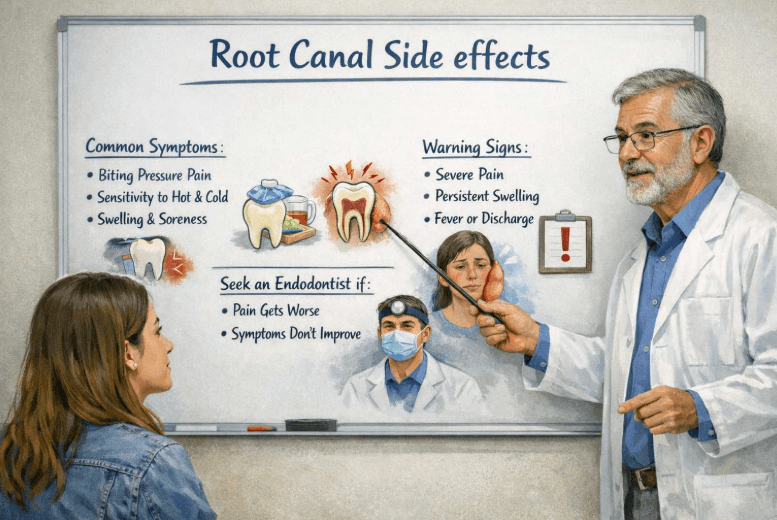
Root canal therapy often carries a reputation that feels worse than the real experience. Many patients postpone treatment because they fear pain, but an untreated tooth infection usually causes stronger and longer-lasting discomfort. Today’s dental techniques focus on numbing the area, removing infection, and protecting the natural tooth. Comparing treatment with extraction or delayed care can help patients make a clearer, more confident decision about their oral health.
1. Why Tooth Pain Feels So Intense
Severe tooth pain often starts when bacteria reach the pulp, the soft inner tissue that holds nerves and blood vessels. Once this area becomes infected or inflamed, pressure can build inside the tooth.
Since a tooth cannot expand like soft tissue, that pressure may create sharp, throbbing, or constant pain. Waiting often makes chewing, sleeping, and drinking hot or cold liquids much harder.
2. The Treatment Is Usually Easier Than Expected
Modern root canal care begins with local numbing, so most patients feel pressure rather than sharp pain. The dentist removes infected tissue, cleans the canals, seals the space, and often restores the tooth with a crown. For patients weighing their choices, root canal treatment in Las Vegas, NV, can help preserve normal chewing while reducing the risk of tooth shifting and bone changes after removal.
Some soreness may happen after the appointment, but it often improves within a few days. Without care, infection can spread, swelling may increase, and urgent treatment may become necessary.
2.1 What Happens During Care
The dentist starts with an exam and imaging to check the tooth’s condition. These steps help show whether the pulp is infected, irritated, or affected by a crack.
After the area is numb, a small opening is made to reach the canal system. Infected tissue is removed, the canals are shaped, and the inside is cleaned.
A sealing material fills the treated canals. A temporary cover or final crown then helps protect strength, chewing function, and bite balance.
3. What If the Tooth Is Removed Instead?
Extraction can relieve pain from a damaged tooth, but it also leaves an open space. Neighboring teeth may shift, the bite can change, and chewing pressure may become uneven.
Replacing the missing tooth can require more appointments, added expense, and extra healing time. Often, keeping the natural tooth is more practical than replacing it later.
3.1 Why Delay Can Cost More
An untreated infection does not always stay predictable. Pain may fade for a while, but bacteria can continue harming tissue around the root.
Swelling, gum tenderness, fever, or a foul taste can point to infection that is spreading. Earlier treatment often means fewer visits and a more predictable outcome.
4. Pain Comparison By Stage
- Before treatment: Infection may cause strong sensitivity, biting pain, swelling, and poor sleep. This stage is often the most painful part.
1.1 During treatment: Numbing helps control discomfort. Patients may feel pressure, vibration, or water spray, but sharp pain should be managed. 2. After treatment: Mild soreness is common because nearby tissue has been irritated. Over-the-counter medicine often helps during the short recovery period.
2.1 Without treatment: Pain may worsen, return suddenly, or move into the jaw. Emergency dental care may be needed if infection spreads.
5. Practical Signs Care Should Not Wait
Pain that lingers after hot or cold drinks may signal irritation inside the tooth. Discomfort that continues after the trigger is gone should be evaluated.
Pain while biting can point to infection, a crack, or pressure near the root. Swelling along the gum near one tooth is another concern.
Tooth darkening, a small bump on the gum, or repeated aching should also be checked. A dental exam can confirm whether root canal therapy is appropriate.
See also: How General Dentistry Protects Oral Health Across Every Stage Of Life
6. Why Saving the Tooth Matters
Natural teeth support chewing strength, clear speech, and jaw stability. Keeping them also helps limit movement in nearby teeth.
A properly treated tooth can last for many years with the right restoration and daily care. Brushing, flossing, regular exams, and a well-fitted crown all support long-term comfort.
7. How Patients Can Reduce Discomfort
Before treatment, patients should describe symptoms clearly, including what triggers pain and how long it lasts. Good details help the dentist identify the cause more efficiently.
After care, patients may need to avoid chewing on the treated side for a short time. Following instructions, taking medicine as directed, and completing the final crown can improve healing and comfort.
Conclusion
A root canal typically hurts less than the infection it is meant to treat and often much less than the problems caused by waiting. The goal is to remove infected tissue, relieve pain, save the tooth, and restore reliable chewing. Extraction may be necessary in some situations, but it can require additional steps afterward. Early evaluation gives patients a better chance at comfort, lower risk, and a healthier natural smile.