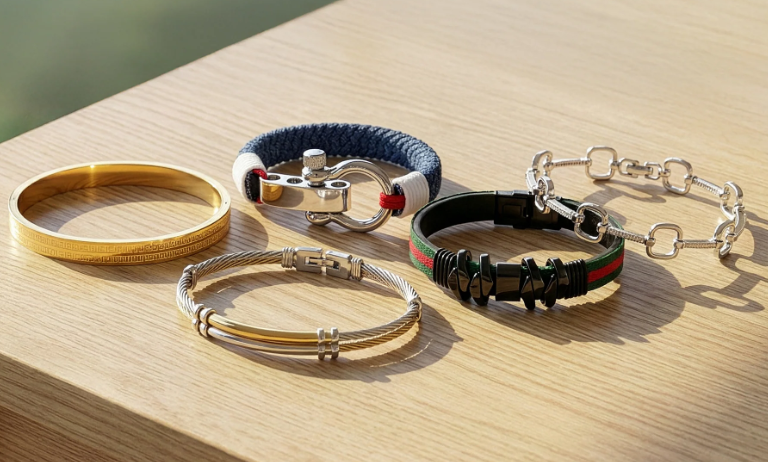
How to Choose a Manufacturer for Your Custom Bracelet Collection
Launching a bracelet collection is an exciting step for any jewelry brand. A bracelet may look simple, but producing one consistently involves dozens of decisions—from the clasp and chain structure to plating, logo placement, packaging, and quality inspection.
For small brands, the challenge is not simply finding a factory that can make jewelry. It is finding a manufacturing partner that understands the product, the target customer, and the realities of launching a new collection without taking unnecessary inventory risks.
This guide explains what to evaluate before choosing a manufacturer and how to prepare a bracelet project for sampling and production.
Start With a Clear Product Direction
Before approaching a manufacturer, define what kind of bracelet collection you want to build. You do not need a complete technical drawing at this stage, but you should be able to communicate the general direction.
Useful starting information includes:
- Bracelet type, such as a chain bracelet, bangle, cuff, beaded bracelet, charm bracelet, or adjustable style
- Target customer and expected retail price
- Preferred color and finish
- Approximate order quantity
- Logo or branding requirements
- Packaging expectations
- Target launch date and sales market
Reference images are helpful, but they should communicate a direction rather than invite an exact copy of another brand’s design. Add notes explaining what you like about each reference—for example, the chain width, clasp style, finish, charm size, or overall proportions.
A capable custom bracelet manufacturer should be able to review this information and help identify practical options for materials, construction, sampling, branding, and production.
Choose a Manufacturer That Fits Your Product Category
The phrase “custom bracelet” can refer to very different products. Some suppliers specialize in silicone wristbands, promotional event bands, or inexpensive giveaways. Others focus on fashion jewelry intended for boutiques, ecommerce stores, and private label collections.
Make sure the manufacturer’s experience matches the product you plan to sell.
For a fashion jewelry collection, relevant capabilities may include:
- Chain, bangle, cuff, beaded, charm, and adjustable bracelet production
- Logo tags, engraved plates, branded clasps, or custom charms
- Gold-tone, silver-tone, rose gold-tone, polished, matte, or vintage finishes
- Sample development before bulk production
- Private label cards, pouches, boxes, and retail-ready packaging
- Reorder support for successful designs
A manufacturer experienced in promotional wristbands may not be the best choice for a branded fashion jewelry line. Likewise, a fine jewelry workshop may be unnecessarily expensive for a trend-focused collection using stainless steel, brass, beads, or plated base metals.
The best partner is the one whose capabilities align with your positioning, price point, and sales channel.
Understand How Customization Affects MOQ
Minimum order quantity is one of the first questions new jewelry brands ask, but MOQ is rarely determined by a single fixed policy. It can change according to the amount of customization required.
There are generally three development paths:
Existing or Ready-to-Customize Styles
The manufacturer starts with an available bracelet structure and changes selected details, such as the plating color, charm, logo tag, jewelry card, or pouch. This approach often reduces development time and may allow more manageable quantities.
Modified Designs
An existing construction is adjusted through changes to dimensions, clasps, chain types, stones, charms, or other components. The MOQ may increase if special parts or dedicated production processes are needed.
Fully Custom Designs
A new bracelet is developed from a sketch, CAD file, or original concept. Custom molds, unique hardware, complex stone settings, or specialized finishes may require higher setup costs and production quantities.
Small brands should ask for an itemized explanation of what drives the MOQ. If a supplier’s minimum is too high, consider simplifying the product, using an existing construction, limiting the number of finishes, or customizing the packaging before investing in new tooling.
A specialized Low MOQ Jewelry Manufacturer can also help a growing brand explore small-batch testing, sample development, private labeling, and reordering without treating the first launch like a large retail program.
Evaluate Materials and Finishes Carefully
Material selection affects appearance, durability, weight, cost, customer expectations, and product descriptions. Common fashion bracelet materials include stainless steel, brass, alloy, beads, enamel, imitation pearls, resin, glass, and crystal-style elements.
Do not select a material based only on a photograph. Ask the manufacturer to explain:
- The base material
- Available plating and finish options
- Bracelet weight and dimensions
- Chain and clasp construction
- Stone, bead, enamel, or charm attachment methods
- Care requirements
- Available material or product testing
- Any limitations affecting wear or durability
Claims such as “waterproof,” “hypoallergenic,” “nickel-free,” or “tarnish-free” should not be added to product listings without suitable technical support. Confirm what the manufacturer can document before building these claims into packaging or marketing.
It is also useful to define a physical reference standard. A polished gold-tone finish, for example, can vary significantly in color and brightness. An approved sample gives both sides a clearer benchmark than a written color description alone.
Always Review a Sample Before Bulk Production
Sampling is one of the most important risk-control steps in jewelry manufacturing. A bracelet that looks correct in a rendering may feel different when worn, and small functional details are easy to miss until the product is handled.
During sample review, check:
- Overall length and fit
- Extender chain length
- Clasp opening and closing
- Chain connections and jump rings
- Charm position and movement
- Logo size, depth, and orientation
- Surface finish and color consistency
- Sharp edges or rough areas
- Stone, bead, or enamel placement
- Packaging fit and presentation
Test the bracelet as a customer would. Put it on and remove it several times, examine how it hangs on the wrist, and see whether the clasp is easy to operate. If the design is adjustable, test the full adjustment range.
Document every requested change in writing. Annotated photos are often more effective than long messages because they identify the exact location of a problem.
Once the revised sample is approved, ask the manufacturer to retain the confirmed specification as the production reference.
Look Beyond the Bracelet to the Customer Experience
Packaging is not an afterthought. For online jewelry brands, it contributes to the first physical impression of the product and can influence giftability, perceived value, and social sharing.
Private label bracelet packaging may include:
- Custom jewelry cards
- Logo pouches
- Branded boxes
- Care cards
- Thank-you cards
- Hang tags
- Barcode or SKU labels
- Product stickers
- Retail-ready outer packaging
A new brand does not need the most elaborate packaging from day one. A clean logo card, suitable pouch, and protective outer package can create a professional presentation while keeping the initial project manageable.
Confirm packaging dimensions during the sampling stage. A bulky charm bracelet may not sit properly on a card designed for a fine chain, while a rigid bangle may require a deeper box.
Ask How Quality Will Be Controlled
Quality control should address both appearance and function. Before placing an order, ask the manufacturer what is checked during production and before shipment.
A bracelet inspection plan can include:
- Bracelet length and component dimensions
- Clasp operation
- Chain and jump-ring closure
- Charm and stone attachment
- Logo placement
- Surface finish and plating appearance
- Scratches, glue residue, or sharp edges
- Color consistency within the batch
- Quantity and packaging accuracy
- Random inspection before shipment
Agree on tolerances where appropriate. Handmade assembly and finishing may involve minor variation, but important dimensions, logo orientation, component security, and packaging details should follow the approved specification.
Brands planning repeat orders should also ask how the manufacturer records materials, finishes, components, and packaging details. Consistency matters when a bestselling bracelet needs to be reproduced several months later.
Compare Communication, Not Just Unit Price
The lowest quotation is not always the lowest-cost option. A cheaper bracelet can become expensive if specifications are unclear, samples require repeated revisions, packaging is incorrect, or the finished batch cannot be sold.
When comparing suppliers, consider:
- How clearly they answer technical questions
- Whether quotations identify materials and customization details
- Whether MOQ and tooling costs are explained
- How sample revisions are documented
- Whether packaging is included or quoted separately
- What quality checks are performed
- How production updates are communicated
- Whether they can support consistent reorders
Good communication during sampling is often a useful indicator of how the supplier will manage bulk production.
Prepare a Complete Inquiry Brief
A well-organized inquiry helps the manufacturer provide a more accurate response. Your initial brief should include:
- Product type and reference images
- Sketches or technical files, if available
- Target material and finish
- Bracelet length and sizing requirements
- Logo file and preferred logo placement
- Estimated quantity per design and color
- Packaging requirements
- Target retail price or production budget
- Intended sales market
- Desired sample and launch timeline
If you are uncertain about a detail, say so and request options. For example, ask the supplier to compare stainless steel and brass for the same design or propose two packaging levels for different budgets.
Final Thoughts
A successful bracelet collection begins with more than an attractive design. It requires a manufacturing plan that balances product quality, customization, MOQ, packaging, cost, and reorder potential.
Start with a focused collection instead of too many unrelated designs. Review physical samples carefully, document specifications, and choose a supplier whose experience matches your product category and stage of growth.
The right manufacturing partner will not simply quote a bracelet. They will help turn a creative direction into a product that can be produced consistently, presented professionally, and reordered as the brand grows.